

How to Change an Adult Diaper: A Step-by-Step Guide

Written by Brianna Maguire on Thu Jun 19 2025.

Caring for a loved one who uses adult diapers with tabs can seem daunting at first, whether they're new to incontinence, transitioning from youth products, or managing heavy incontinence. At Carewell, our Caregiving Specialists are here to simplify the process and help you become a pro. This comprehensive guide will walk you through everything you need to know about changing an adult diaper, ensuring comfort, hygiene, and confidence for both you and your loved one.
Essential products for changing an adult diaper
Before you begin, gather these key incontinence products to ensure a smooth and hygienic change:
Disposable Bed Pad: When you're changing an adult diaper for a loved one, especially someone who is bedridden or has limited mobility, disposable underpads are an absolute must-have. These absorbent pads act as a crucial protective barrier, placed beneath your loved one to capture any leaks or messes that might occur during the changing process. This not only keeps bedding, furniture, and surfaces clean and dry but also significantly simplifies cleanup, saving you time and effort. We like Cardinal Wings Quilted Premium Comfort Underpad.
Tab-Style Briefs: These absorbent incontinence products open at the sides, making them ideal for bedridden or immobile loved ones, individuals with very heavy urine or regular bowel incontinence, or those needing larger sizes (above 2XL). Choosing the right tab-style brief is crucial for effective leak protection. Attends Overnight Bariatric Adult Incontinence Briefs are a great solution for bariatric needs.
Adult Wipes: Opt for extra-large, pre-moistened adult cleansing wipes designed to thoroughly cleanse sensitive skin. These are often twice the size of baby wipes, offering better coverage and protecting caregivers' hands. Consider fragrance-free options for sensitive skin. For diaper changes, non-flushable wipes are generally sturdier and less prone to tearing. We like Prevail Premium Washcloths Adult Personal Wipes.
Gloves: Gloves are an essential tool for ensuring safety and cleanliness during every adult diaper change. They create a crucial barrier between the caregiver and potential contaminants, significantly reducing the risk of exposure to bacteria and bodily fluids. This protection is vital for preventing the spread of infection, safeguarding both the caregiver's and the loved one's health.
Barrier Creams: These creams are vital for skin protection and preventing incontinence-associated dermatitis.
Remember, having the right incontinence supplies is key to effective incontinence management. If you're unsure which tab-style briefs, gloves, or wipes are best for your loved one's unique needs, contact our friendly Care Team for a custom recommendation, or explore our detailed incontinence guide.
Do I Need a Diaper Cream or Barrier Cream?
Using a barrier cream is highly recommended to protect your loved one's skin from incontinence-associated damage. These creams create a waterproof film over the skin, effectively guarding against potentially harmful moisture and irritants.
Consider using a barrier cream or diaper cream in these situations:
As a preventative measure: Apply barrier cream every other time your loved one is changed to help maintain healthy skin and prevent future issues.
For existing skin concerns: If your loved one is experiencing skin discomfort, itching, or redness in the perineal area, apply diaper cream at every change. In these cases, also cleanse with a perineal wash for enhanced care.
How to change a bedridden loved one's adult diaper
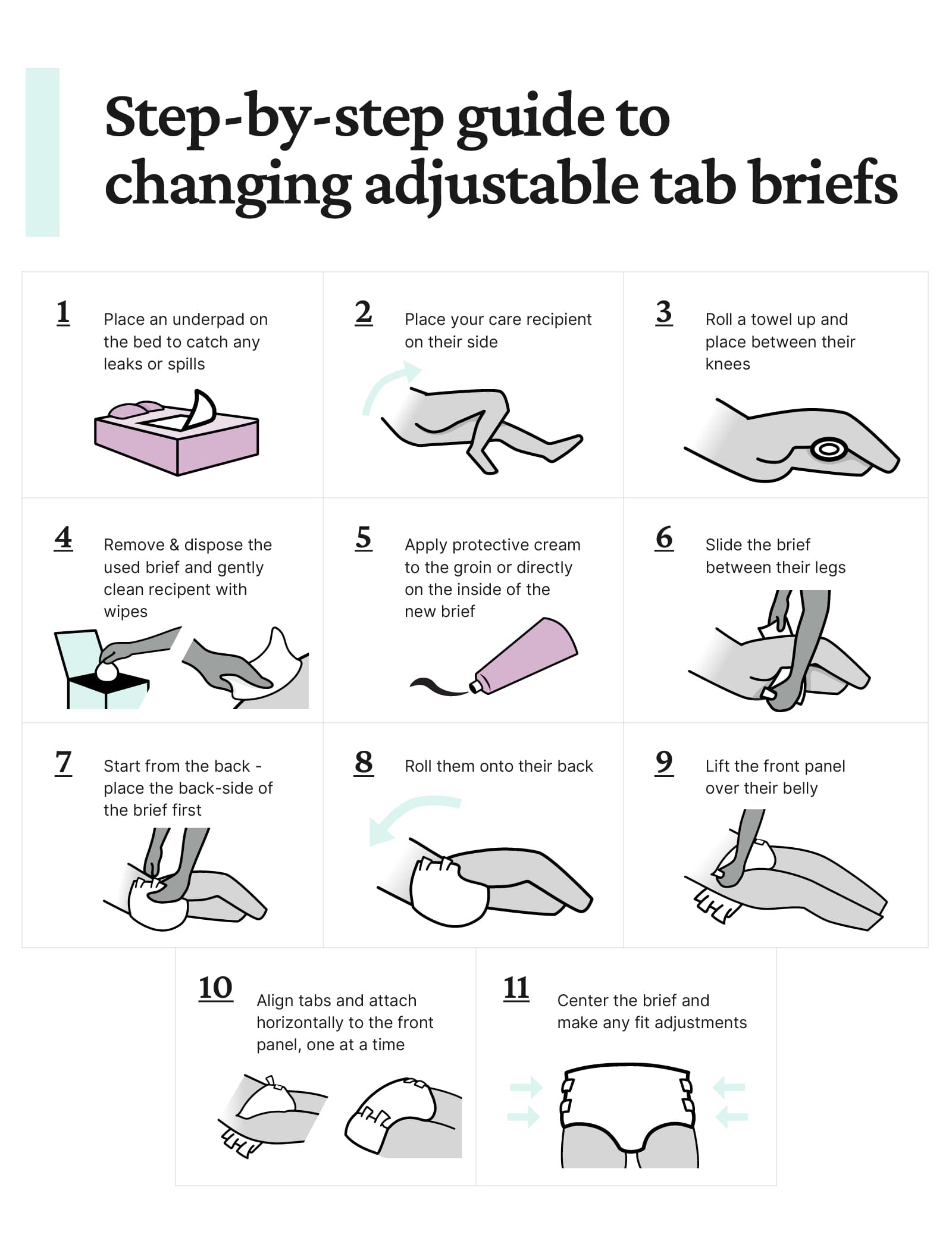
Changing a bedridden loved one's adult diaper requires a systematic approach to maintain cleanliness and comfort.
Prepare the area: Start by placing a disposable underpad beneath your loved one. These absorbent pads will protect your bedding and furniture from any spills or messes during the change.
Position your loved one: Gently place them on their back, centered on the disposable underpad.
Remove the soiled brief: Unfasten the tabs from the front panel and pull the front panel down.
Initial cleanup: Use a hygienic wipe to clean any incontinence from the front of the body. For convenience, place used wipes inside the soiled brief for disposal.
Clean the back: Use a fresh hygienic wipe to clean your loved one’s behind. If there's odor, rashes, or heavy bowel incontinence, consider using a perineal wash for enhanced cleanliness and skin health.
Contain and dispose: Roll the soiled brief up, securing it with its side tabs with the used wipes inside.
Change gloves (if soiled): If your gloves have become soiled, put on a fresh pair before handling the new diaper.
How to Put on a Fresh Adult Diaper
Once the cleanup is complete, it's time to put on a fresh adult brief.
Hygiene first: Wash your hands thoroughly, and put on a fresh pair of gloves if desired.
Position for application: Gently roll your loved one onto their side.
Prepare the new brief: Fold the adult brief lengthwise (like a hot dog bun).
Slide into place: Slide the folded brief between their legs, ensuring the side with the tabs remains at the back.
Fan out the back: Fan the back portion of the brief out smoothly across your loved one's behind.
Roll and secure: Gently roll your loved one onto their back, allowing them to rest on top of the back panel of the brief. Pull the front panel up and over their belly.
Fasten the tabs: Securely fasten the tabs across their waist.
For briefs with one tab per side: Position the tab where it feels most secure and comfortable (usually across the front panel).
For briefs with two tabs per side: Fasten the bottom tab straight across. Angle the top tab downwards for a secure fit.
Is My Loved One’s Diaper the Right Size?
A properly fitting adult diaper is crucial for preventing leaks and ensuring comfort. You can tell if the size is right by observing the tab placement:
Ideal fit: The tabs should rest comfortably on the front of the hips.
Too small: If the tabs sit far back against the hips, the product is too small. A diaper that's too small can cause discomfort, pinching, and potential skin irritation.
Too large: If the tabs overlap significantly over the belly, the size is too large. Oversized products are prone to leaks through gaps, especially around the leg openings or up the back.
To find the most accurate size for tab-style briefs, measure both your loved one's waist and hip sizes in inches. Always use the larger of these two measurements to reference the sizing guides provided with each product.
How Often Should I Change My Loved One's Diaper?
The frequency of adult diaper changes depends on individual voiding patterns and the absorbency level of the product being used. Generally, most incontinence products should be changed 4-6 times per day. Here are some key guidelines:
Wetness indicator: Many tab-style briefs feature a built-in wetness indicator. Change the product as soon as this indicator changes color.
Bowel movements: Always change the product immediately after a bowel movement to maintain skin integrity and hygiene.
Frequent leaks: If your loved one is experiencing leaks, even with a high-absorbency product, consider increasing the frequency of changes or adding a booster pad.
Regularly changing absorbent products is vital for preventing skin irritation, promoting skin health, and ensuring continuous comfort.
Other Articles You May Like

Best Overnight Pull-Ups for Adults: A Complete Guide for Men and Women
Managing overnight incontinence can be challenging, but the right pull-ups make all the difference. This guide covers the best overnight pull-ups for men and women, highlighting key features, benefits, and tips to help you stay dry, comfortable, and confident throughout the night.
Read More >
How to Manage Incontinence in Older Adults: A Practical 5-Step Guide
Let’s be honest—discussing private physical issues can be embarrassing at times. As a society, we often feel squeamish at the prospect of having open discussions about incontinence. So let’s talk about how to deal with elderly incontinence.
Read More >Brianna Maguire
Brianna Maguire heads up Carewell’s Customer Care Team, and serves as a resource for caregivers that need support. Whether it’s helping customers decide which products are best for their needs, answering caregiver questions, or just providing a shoulder to lean on on a tough day, her job is to make caregivers’ lives easier.